Materials ETF Investing: Industrial Commodity Income
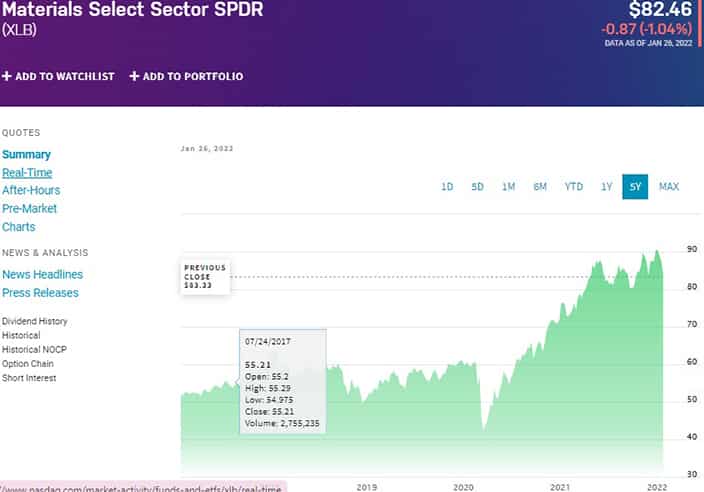
Imagine a world where you could tap into the fundamental building blocks of modern society – the raw materials that fuel industries and shape our everyday lives. Want to diversify your portfolio and potentially earn income from the essential elements that drive global economies? Let's explore how you can achieve this through Materials ETFs.
Navigating the world of investing can sometimes feel overwhelming. Many investors find it challenging to identify opportunities that offer both diversification and potential income streams. Figuring out which sectors to invest in and how to gain exposure to specific commodities can also seem like a complex and time-consuming endeavor.
Materials ETFs offer a solution by providing a convenient and accessible way to invest in a basket of companies involved in the production and processing of raw materials, like metals, chemicals, and timber. These ETFs can provide exposure to a broad range of companies within the materials sector, potentially offering diversification and income through dividends.
This article explores the world of Materials ETFs, examining their benefits, risks, and how they can fit into a diversified investment strategy. We'll delve into the underlying components of these ETFs, discuss their potential for income generation, and provide insights into how to evaluate and select the right Materials ETF for your investment goals. The key to unlocking industrial commodity income may be closer than you think.
My First Foray into Materials ETFs
I remember when I first started exploring the world of ETFs. The sheer number of options was overwhelming, but the idea of investing in entire sectors with a single purchase was incredibly appealing. My initial attraction to Materials ETFs came from a desire to diversify my portfolio beyond technology and consumer discretionary stocks. I was looking for something tangible, something tied to the real-world economy. At the time, infrastructure spending was on the rise, and it seemed logical that companies involved in producing the building blocks of that infrastructure – steel, cement, and lumber – would benefit. I took a small position in a well-known Materials ETF and watched with interest as the prices of these underlying commodities fluctuated. It wasn't a get-rich-quick scheme, but it provided a steady stream of dividends and exposure to a sector that felt fundamentally sound. This personal experience highlighted the power of Materials ETFs as a tool for diversification and income generation, even for novice investors like myself. Diving deeper, I learned that Materials ETFs are exchange-traded funds that focus on companies involved in the discovery, development, processing, or transportation of raw materials. These materials can include metals and mining, chemicals, forestry products, and construction materials. The goal is to provide investors with exposure to the performance of the materials sector without requiring them to individually select and manage a portfolio of materials companies. These ETFs track specific indexes or utilize a sampling methodology to replicate the performance of the materials sector. The prices of the ETF units vary based on the prices of the constituent securities of the index that the ETF is tracking. Materials ETFs offer a diversified investment that is relatively liquid compared to investing directly into the business.
Understanding Materials ETF Investing
Materials ETF Investing: Industrial Commodity Income refers to the strategic allocation of capital into Exchange Traded Funds (ETFs) that focus on companies involved in the production, processing, and distribution of raw materials. This investment strategy aims to generate income through dividends paid by these companies, as well as potential capital appreciation from the increasing value of their assets. The underlying principle is that as global demand for raw materials increases due to industrial growth, infrastructure development, and urbanization, the companies involved in supplying these materials stand to benefit. Investing in Materials ETFs provides a diversified approach to capturing this potential growth, as these ETFs typically hold a basket of stocks across various sub-sectors within the materials industry, such as metals and mining, chemicals, forestry products, and construction materials. The income generated by Materials ETFs can be a valuable component of a diversified investment portfolio, providing a steady stream of cash flow. Furthermore, the potential for capital appreciation can further enhance the overall return on investment. Investors can benefit from the exposure to industrial commodities through Materials ETFs, especially if they anticipate an increase in the prices of raw materials due to supply chain disruptions, geopolitical events, or growing demand from emerging markets.
History and Myths of Materials ETF Investing
The history of Materials ETF Investing traces back to the broader development of ETFs in the late 20th century. As ETFs gained popularity as a convenient and diversified investment vehicle, specialized ETFs focusing on specific sectors like materials emerged to cater to investors seeking targeted exposure. Early Materials ETFs typically focused on well-established industries like metals and mining, providing investors with an easy way to invest in companies involved in the production of steel, aluminum, and other essential metals. Over time, the range of Materials ETFs expanded to include other sub-sectors like chemicals, forestry products, and construction materials. This evolution reflected the growing sophistication of the ETF market and the increasing demand for more granular investment options. Despite the growing popularity of Materials ETFs, several myths persist. One common misconception is that Materials ETFs are inherently risky due to the cyclical nature of commodity prices. While it is true that commodity prices can fluctuate significantly, Materials ETFs offer a diversified approach that can mitigate some of this risk. Another myth is that Materials ETFs are only suitable for short-term trading strategies. While some investors may use Materials ETFs for speculative purposes, they can also be a valuable long-term investment for those seeking exposure to the industrial commodity sector. By understanding the history and debunking the myths surrounding Materials ETFs, investors can make more informed decisions about incorporating them into their portfolios.
Hidden Secrets of Materials ETF Investing
One of the hidden secrets of Materials ETF Investing lies in the ability to identify niche sub-sectors within the broader materials industry that are poised for growth. While many investors focus on well-known commodity companies, there are often smaller, specialized companies that are at the forefront of innovation and are uniquely positioned to capitalize on emerging trends. For example, companies involved in the production of rare earth elements, which are used in electric vehicles and renewable energy technologies, may offer significant growth potential. Another secret is to pay close attention to the macroeconomic factors that can influence the demand for raw materials. Infrastructure spending, urbanization rates, and government policies can all have a significant impact on the prices of commodities and the performance of materials companies. By carefully analyzing these factors, investors can gain a competitive edge in the Materials ETF market. Furthermore, understanding the supply-side dynamics of the commodity market is crucial. Factors such as mine closures, production disruptions, and geopolitical tensions can all affect the availability of raw materials and drive prices higher. By staying informed about these supply-side factors, investors can anticipate potential price increases and position themselves accordingly. Finally, it is important to remember that Materials ETF Investing is not a get-rich-quick scheme. It requires patience, discipline, and a long-term perspective. By focusing on fundamentals, conducting thorough research, and avoiding emotional decision-making, investors can unlock the hidden secrets of Materials ETF Investing and achieve their financial goals.
Recommendations for Materials ETF Investing
When considering Materials ETF Investing, it's wise to begin with a clear understanding of your own investment goals and risk tolerance. Are you seeking primarily income, capital appreciation, or a combination of both? Your answer will guide your choice of ETF. A good starting point is to research ETFs with a proven track record, low expense ratios, and high trading volume. Look for ETFs that track well-established indices and have a diversified portfolio of holdings. Consider ETFs that focus on specific sub-sectors within the materials industry that align with your investment thesis. For example, if you believe that the demand for electric vehicles will continue to grow, you may want to consider ETFs that invest in companies involved in the production of lithium, cobalt, and other battery materials. Another recommendation is to pay attention to the ETF's underlying methodology. Some ETFs use a market-cap weighted approach, while others use a more active or fundamental approach. Understand how the ETF's methodology can impact its performance and risk profile. It's also crucial to regularly rebalance your portfolio to maintain your desired asset allocation. As the prices of commodities fluctuate, the weightings of your Materials ETF holdings may shift over time. Rebalancing helps to ensure that your portfolio remains aligned with your investment goals and risk tolerance. Lastly, don't be afraid to seek professional advice from a financial advisor. A qualified advisor can help you assess your investment needs, select the right Materials ETFs for your portfolio, and develop a comprehensive investment strategy.
Materials ETF Investing and Geopolitical Risk
Geopolitical risk plays a significant role in the world of Materials ETF investing, and understanding this influence is crucial for making informed investment decisions. The materials sector, by its very nature, is often intertwined with global politics and international relations. Many raw materials are sourced from specific regions around the world, and any instability in those regions can have a direct impact on supply chains, production costs, and ultimately, the prices of commodities. For example, political unrest in a major mining region could lead to production disruptions, causing prices of metals like copper, aluminum, or iron ore to spike. Similarly, trade disputes between countries can affect the flow of materials across borders, leading to tariffs, quotas, and other trade barriers that impact the profitability of materials companies. Sanctions imposed on certain countries can also restrict access to raw materials, affecting the availability and prices of commodities. Therefore, investors in Materials ETFs need to be aware of the geopolitical landscape and how it can impact their investments. They should monitor news and events that could potentially disrupt the supply of raw materials, such as political elections, conflicts, natural disasters, and policy changes. By understanding the geopolitical risks associated with Materials ETF investing, investors can make more informed decisions about when to buy, sell, or hold their positions. They can also consider diversifying their investments across different regions and sub-sectors within the materials industry to mitigate the impact of geopolitical risks on their portfolio.
Tips for Successful Materials ETF Investing
Successful Materials ETF Investing requires a combination of knowledge, discipline, and a long-term perspective. One of the most important tips is to conduct thorough research before investing in any Materials ETF. Understand the ETF's underlying holdings, its investment methodology, and its historical performance. Pay attention to the ETF's expense ratio, which can impact your overall returns. Another key tip is to diversify your investments across different Materials ETFs and across different asset classes. Don't put all your eggs in one basket. Diversification can help to reduce your risk and improve your overall portfolio performance. It's also crucial to stay informed about the macroeconomic factors that can influence the demand for raw materials. Monitor economic growth rates, inflation rates, and interest rates, as these factors can all impact the prices of commodities and the performance of materials companies. Consider using a dollar-cost averaging strategy, which involves investing a fixed amount of money in Materials ETFs at regular intervals. This strategy can help to smooth out your returns and reduce your risk of buying high and selling low. Finally, be patient and avoid emotional decision-making. Materials ETF Investing can be volatile, and there will be times when your investments decline in value. Don't panic and sell your positions at the first sign of trouble. Instead, focus on the long-term fundamentals and maintain a disciplined investment approach.
Understanding Materials ETF Expense Ratios
Expense ratios are an important consideration when evaluating Materials ETFs. The expense ratio represents the annual cost of operating the ETF, expressed as a percentage of the ETF's assets. It covers the fees paid to the ETF's management company, as well as other operating expenses. A lower expense ratio means that more of your investment returns are passed on to you, while a higher expense ratio means that more of your returns are eaten up by fees. When comparing Materials ETFs, it's important to look for ETFs with low expense ratios. Even a small difference in expense ratios can have a significant impact on your long-term returns. For example, an ETF with an expense ratio of 0.50% will cost you $50 per year for every $10,000 invested, while an ETF with an expense ratio of
0.20% will cost you only $20 per year for every $10,000 invested. Over time, this difference can add up to a substantial amount of money. Keep in mind that expense ratios are not the only factor to consider when evaluating Materials ETFs. You should also consider the ETF's underlying holdings, its investment methodology, its historical performance, and its trading volume. However, expense ratios are an important factor to keep in mind, as they can have a direct impact on your investment returns.
Fun Facts About Materials ETF Investing
Did you know that some Materials ETFs invest in companies that are involved in recycling and waste management? These companies play a crucial role in reducing the demand for virgin raw materials and promoting sustainability. It's a great example of how Materials ETF Investing can align with environmental, social, and governance (ESG) principles. Here's another fun fact: the price of lumber can be a leading indicator of the housing market. When lumber prices rise, it's often a sign that homebuilding activity is increasing. This can be a valuable piece of information for investors who are trying to gauge the health of the overall economy. Moreover, certain Materials ETFs are designed to provide exposure to specific geographic regions, such as emerging markets. These ETFs can offer investors a way to participate in the growth of developing economies and benefit from the increasing demand for raw materials in those regions. Finally, it's worth noting that Materials ETFs can be used to hedge against inflation. Raw materials are often considered to be a store of value, and their prices tend to rise during periods of inflation. By investing in Materials ETFs, investors can protect their portfolios from the eroding effects of inflation. Learning these fun facts can give investors a deeper appreciation for the complexities and nuances of Materials ETF Investing.
How to Choose the Right Materials ETF
Choosing the right Materials ETF requires careful consideration of several factors. First, you need to determine your investment goals and risk tolerance. Are you looking for income, capital appreciation, or a combination of both? How much risk are you willing to take? Once you have a clear understanding of your investment objectives, you can start to narrow down your options. Pay attention to the ETF's expense ratio, which can impact your overall returns. Look for ETFs with low expense ratios, but don't sacrifice quality for cost. Consider the ETF's underlying holdings and investment methodology. Does the ETF track a well-established index? Does it use a market-cap weighted approach or a more active approach? Make sure that the ETF's holdings and methodology align with your investment philosophy. It's also important to consider the ETF's historical performance. Look for ETFs with a consistent track record of strong performance, but remember that past performance is not necessarily indicative of future results. Finally, pay attention to the ETF's trading volume and liquidity. You want to choose an ETF that is actively traded and has a narrow bid-ask spread. This will make it easier to buy and sell the ETF without incurring significant transaction costs.
What If Materials ETF Investing Goes Wrong?
Even with careful planning and due diligence, Materials ETF Investing can sometimes go wrong. Commodity prices can be volatile, and unforeseen events can disrupt supply chains and impact the performance of materials companies. For example, a global recession could lead to a sharp decline in demand for raw materials, causing the prices of commodities to plummet. A major natural disaster could disrupt production in a key mining region, leading to supply shortages and price spikes. A trade war between major economies could lead to tariffs and other trade barriers, impacting the profitability of materials companies. If Materials ETF Investing goes wrong, it's important to remain calm and avoid making impulsive decisions. Don't panic and sell your positions at the first sign of trouble. Instead, re-evaluate your investment thesis and determine whether the underlying fundamentals of the materials sector are still sound. If you believe that the long-term outlook for the materials sector is still positive, you may want to consider holding onto your positions and riding out the volatility. Alternatively, you may want to consider rebalancing your portfolio by reducing your exposure to Materials ETFs and increasing your exposure to other asset classes. It's also important to learn from your mistakes and use them as an opportunity to improve your investment strategy. By understanding the risks of Materials ETF Investing and developing a plan for dealing with potential setbacks, you can increase your chances of achieving long-term success.
Listicle of Materials ETF Investing
Here is a listicle for Materials ETF Investing:
1.Diversification: Gain exposure to a broad range of companies in the materials sector.
2.Income Potential: Earn dividends from companies involved in the production of raw materials.
3.Convenience: Invest in an entire sector with a single purchase.
4.Accessibility: Materials ETFs are readily available on major stock exchanges.
5.Transparency: ETF holdings are typically disclosed daily, providing investors with insights into the underlying assets.
6.Liquidity: Materials ETFs are generally highly liquid, allowing investors to buy and sell shares easily.
7.Low Cost: Materials ETFs typically have low expense ratios compared to actively managed mutual funds.
8.Inflation Hedge: Raw materials can act as a hedge against inflation, protecting your portfolio's purchasing power.
9.Sector Exposure: Gain targeted exposure to specific sub-sectors within the materials industry, such as metals, chemicals, or forestry products.
10.Global Opportunities: Invest in companies that operate in different regions around the world, capturing growth opportunities in emerging markets.
Question and Answer about Materials ETF Investing
Q: What are the main benefits of investing in Materials ETFs?
A: Materials ETFs offer diversification, income potential, convenience, and exposure to a sector that is essential to the global economy.
Q: What are the risks associated with investing in Materials ETFs?
A: The risks include commodity price volatility, macroeconomic factors, geopolitical risks, and company-specific risks.
Q: How do I choose the right Materials ETF for my portfolio?
A: Consider your investment goals, risk tolerance, expense ratio, underlying holdings, historical performance, and trading volume.
Q: How can I manage the risks associated with Materials ETF investing?
A: Diversify your investments, stay informed about market conditions, use a dollar-cost averaging strategy, and avoid emotional decision-making.
Conclusion of Materials ETF Investing
In conclusion, Materials ETF Investing offers a unique opportunity to tap into the industrial commodity sector and potentially generate income. By understanding the benefits, risks, and key considerations, investors can make informed decisions and incorporate Materials ETFs into a diversified investment strategy. Whether you're seeking income, capital appreciation, or a hedge against inflation, Materials ETFs can be a valuable tool for achieving your financial goals.
Post a Comment